You’ve probably heard people talk about the endocannabinoid system, but what is it really?
The endocannabinoid system is a complex cannabinoid-signaling system in the human body, essential for regulating functions like mood, memory, appetite, and pain. It is made up of several parts, including endocannabinoids, receptors, and enzymes. These parts work together to keep our body in balance.
If you enjoy this plant for recreational or therapeutic purposes, it’s time to learn how it influences endocannabinoid signaling to produce its myriad wonderful effects.
Endocannabinoid System 101
Discovered in the early 1990s, the endocannabinoid system (ECS) is a naturally occurring cell-signaling network that helps keep our bodies in balance. It works quietly behind the scenes to regulate our mood, memory, appetite, pain, and much more.
The ECS is made up of three main parts:
Endocannabinoids
These are naturally produced molecules (that act a lot like the cannabinoids found in cannabis) that emulate messengers that keep your body in check. The two most well-known endocannabinoids are anandamide (AEA) and 2-arachidonoylglycerol (2-AG).
Receptors
Receptors are like docking stations located throughout your body, waiting for those endocannabinoid “messages.” When endocannabinoids (or cannabinoids) bind to these receptors, they trigger specific effects that help restore balance.
Enzymes
Once the endocannabinoids have done their job, enzymes break them down to prevent the system from becoming overstimulated.
Altogether, these components form a complex communication system that helps different parts of the body stay in sync. By fine-tuning various systems, the ECS helps maintain a steady internal balance known as homeostasis.
And as research continues to uncover more about the ECS, it becomes evident that this system is a potential goldmine for medical and therapeutic applications.
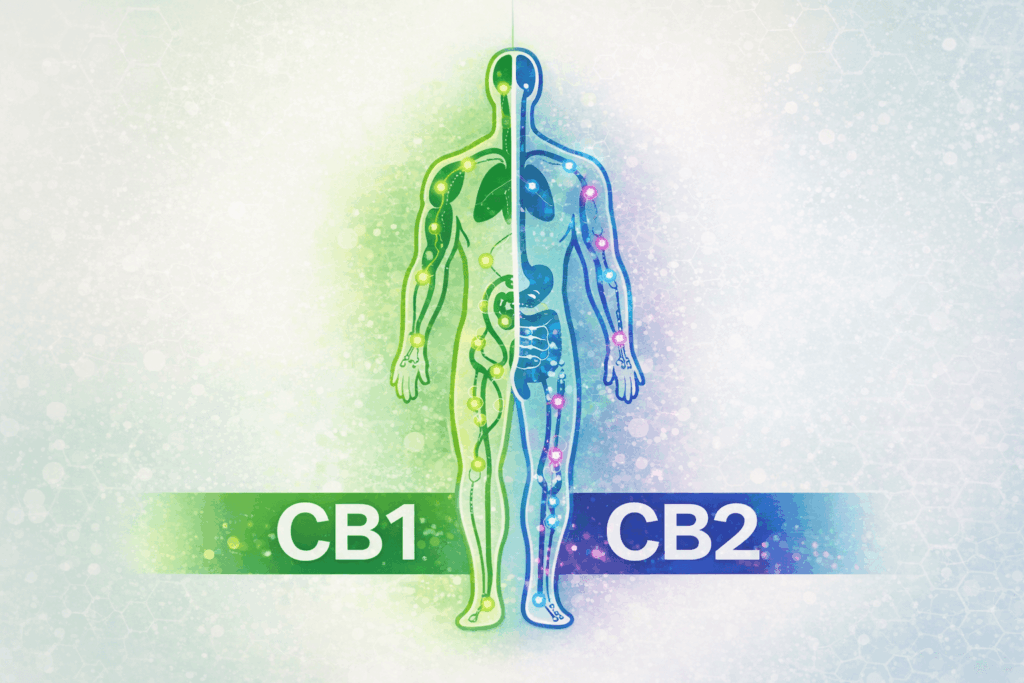
Cannabinoid Receptors: CB1 and CB2
Cannabinoid receptors are one of the three core components of the ECS; they’re the key connection points where cannabinoids (whether produced by our bodies or cannabis) interact with the human body.
The two main types of cannabinoid receptors are CB1 and CB2, each serving distinct but complementary roles in the endocannabinoid system.
Both CB1 and CB2 receptors are part of a large family of receptors known as G protein-coupled receptors (GPCRs). This is the group responsible for passing signals between cells.
When these receptors are activated, they trigger reactions within the cell that affect things like intracellular calcium levels and synaptic function. This helps the ECS maintain homeostasis in the human body.
CB1 Receptors
CB1 receptors are mainly found in the central nervous system, especially in the cerebral cortex, basal ganglia, and hippocampus. These are areas of the brain that control movement, memory, and mood. When endocannabinoids bind to these receptors, they help regulate functions such as food intake, mood, pain, and learning.
These concentrations of CB1 receptors in the brain also explain why THC causes the familiar “high.” By interacting with the CB1 receptors, THC changes how signals move between neurons, creating psychoactive effects that can influence perception, focus, and relaxation.
CB2 Receptors
CB2 receptors are mostly found outside the brain, in the peripheral nervous system and immune cells. Their main job is to help regulate inflammation, immune responses, and the body’s response to chronic stress or injury. When activated, they can help calm overactive immune reactions and support overall balance in the body.
And one of the most remarkable aspects of this system is that cannabinoids from the Cannabis sativa species (such as THC and CBD) interact seamlessly with these very same receptors.
Depending on the cannabinoids and the receptor, they have either a direct or an indirect binding relationship. For example, THC fits like a hand into a glove with the CB1 receptor, while CBD tends to indirectly influence the receptor activity.
Endogenous Cannabinoids: Anandamide and 2-AG
Cannabinoids aside for a moment, let’s talk about the molecules your own body produces, which are known as endogenous cannabinoids or endocannabinoids.
To say it again for the people in the back: these naturally occurring molecules help keep things balanced and functioning smoothly. They are the backbone of the ongoing, invisible endocannabinoid signaling that occurs 24 hours a day, seven days a week.
The two main ones are anandamide (AEA) and 2-arachidonoylglycerol (2-AG).
Anandamide (the “Bliss Molecule”)
Anandamide gets its nickname—the “bliss molecule”—because of its links to pleasure, motivation, and mood. It’s produced when your cells become more active. Once released, it binds to cannabinoid receptors (mostly CB1) in the central nervous system, influencing mood, memory, and how you experience pain.
2-AG (the Everyday Regulator)
2-AG is more abundant than anandamide and plays a bigger role in maintaining daily endocannabinoid system function. It’s involved in both lipid metabolism and neuronal signaling, acting as a key messenger between brain cells. Produced on demand rather than stored, 2-AG helps regulate neurotransmitter release, appetite, and even immune responses.
Together, these endocannabinoid system components help regulate everything from chronic stress and mood to appetite and pain perception. The careful synthesis and degradation of these endogenous molecules ensure the ECS stays balanced and is always ready to respond when your body needs to regain its rhythm.
Enzymes for Synthesis and Degradation
Alongside endocannabinoids and the receptors, your body also uses enzymes to manage the activity of these messengers. While many enzymes help run the system, a few stand out.
Fatty Acid Amide Hydrolase
Anandamide (AEA) is made from a fatty acid called arachidonic acid through a compound known as N-arachidonoyl phosphatidylethanolamine. Once it’s done its job, AEA is quickly broken down by the enzyme fatty acid amide hydrolase, which helps keep its effects short and controlled.
Monoacylglycerol Lipase
2-AG is produced from a lipid called phosphatidylinositol bisphosphate and is later broken down by monoacylglycerol lipase (MAGL). These enzymes work like on/off switches, controlling when and where endocannabinoid signaling happens in the body.
Our body’s efforts to synthesize and degrade endocannabinoids ensure the ECS stays finely tuned. When everything is working as it should, 2-AG can send out the messengers when needed, then turn them off when the job’s done.
The Many, Many Functions of the Endocannabinoid System
The ECS manages everything from mood and memory to appetite and pain control, and research shows that endocannabinoid signaling also connects the brain, immune system, and even the gut microbiome, influencing both emotional health and physical well-being.
Here is a closer look at how the ECS can keep all of these systems in balance:
Mood and Memory Regulation
The ECS plays a vital role in emotional balance, learning, and memory. When endocannabinoids bind to cannabinoid receptors, they help regulate how neurons communicate with each other. This process is known as synaptic plasticity. It’s what allows the brain to form new memories and adapt over time.
In the hippocampus, a region of the central nervous system tied to memory, endocannabinoid receptors and enzymes like fatty acid amide hydrolase (FAAH) help guide this process. Interestingly, THC from the cannabis plant can temporarily affect these memory pathways, sometimes making it harder to form or recall new memories.
Appetite Regulation
The ECS plays a big role in how we feel hunger and satisfaction. When THC activates CB1 receptors in the hypothalamus, a part of the human brain that helps control appetite. THC can trigger that familiar feeling known as the “munchies.”
This effect isn’t just limited to recreational cannabis use. In medical cannabis research, the same mechanism is being studied for its potential to help cancer patients or those struggling with substance use disorders and appetite loss.
By supporting natural endocannabinoid production and signaling, therapeutic cannabis may help restore healthy eating patterns and maintain energy balance.
Pain Sensation
The ECS also regulates how the body senses and responds to pain. Through CB1 receptors in the central nervous system and CB2 receptors in immune cells, the ECS controls both pain perception and inflammation.
CB1 receptors reduce the intensity of pain signals sent to the brain, while CB2 receptors calm inflammation that can worsen chronic pain. This balance explains why cannabinoid compounds like THC and CBD show strong analgesic efficacy and anti-inflammatory benefits.
THC binds directly to CB1 receptors, helping ease neuropathic pain and muscle tension. CBD, meanwhile, works more indirectly, supporting endocannabinoid signaling and reducing inflammation throughout the gastrointestinal tract and immune system. Together, cannabinoids like THC and CBD offer a natural, multi-layered approach to pain management.
What About the Interactions Between THC, CBD, and the ECS?
When it comes to how cannabis affects the body, it all happens through the ECS. Two of the best-known cannabinoids, THC and CBD, interact with this system in different ways, creating distinct effects and therapeutic benefits.
The Endocannabinoid System and THC
THC interacts directly with the ECS by binding to cannabinoid receptors throughout the central nervous system and immune system. Specifically, it connects with CB1 receptors, influencing neuronal excitability, mood, and perception.
This direct interaction helps explain why THC produces more noticeable effects than CBD. For many cannabis users, THC is known for its relaxing, euphoric qualities and its ability to help manage chronic pain, nausea, and appetite loss.
These effects come from how THC mimics the body’s natural endocannabinoids, essentially stepping in to activate the same signaling pathways that help regulate pain and mood disorders.
While THC’s effects can feel powerful, they’re also temporary. The body’s enzymes eventually break it down, allowing the endogenous cannabinoid system to return to its natural rhythm and maintain homeostasis.
The Endocannabinoid System and CBD
CBD works within the ECS indirectly. Instead of binding strongly to cannabinoid receptors, CBD helps the body’s natural endocannabinoids, such as anandamide, stick around longer by slowing their breakdown by enzymes like fatty acid amide hydrolase (FAAH).
Because it doesn’t create the same psychoactive effects as THC, CBD is often used for balance, focus, and relief without the “high.” It can also act as a negative allosteric modulator at the CB1 receptor, meaning it softens THC’s intensity. This is why products that blend THC and CBD often feel smoother and more balanced, delivering relief with a calmer edge.
Early pharmacological research suggests that CBD supports the ECS by reducing inflammation, promoting gut health, and helping regulate stress and anxiety.
Emerging Research into the ECS
Considering the ECS was discovered only 30 years ago, study into the system is moving fast, opening new possibilities for pharmacological research and medical innovation. Scientists are exploring how the ECS influences everything from neuronal excitability and mood disorders to irritable bowel syndrome and even cancer.
Because the ECS helps keep so many systems in balance, understanding how it works could lead to more effective, targeted treatments for a wide range of health conditions.
New tools are giving researchers a closer look at how individual cells respond to cannabinoid receptor activity, especially in complex diseases like cancer. This detailed insight could help personalize treatments and improve their therapeutic efficacy.
Studies are also examining how cannabinoids can enhance traditional therapies, helping to reduce side effects and improve outcomes for cancer patients and others living with chronic illness.
While there are still hurdles, the future of cannabis research looks promising. As our understanding of the ECS deepens, so does the potential for safer, more effective therapies that harness the body’s own natural balance system.
The ECS Brings It All Together
The ECS is the body’s behind-the-scenes manager, keeping mood, memory, appetite, and pain in check so everything runs smoothly. It’s what connects the science of the human body to the natural power of the cannabis plant, showing why cannabinoids like THC and CBD can have such wide-reaching effects.
As cannabis research continues to grow into both endogenous cannabinoids and the cannabinoids produced by the plant, we’re learning just how much this system shapes overall well-being. The more we understand how endocannabinoids and cannabinoid receptors work together, the better we, as cannabis users, can rely on this plant for full-body support.
At Sticky Thumb, we believe education is part of the experience. The more you know about your body’s relationship with cannabis, the better you can choose products that support balance, relaxation, and good vibes.
Shop Smarter with Sticky Thumb
Whether you’re exploring cannabis through flavor, wellness, or curiosity, understanding how the endocannabinoid system works can help you make more intentional choices about how you consume. By learning how cannabinoids interact with CB1 and CB2 receptors throughout the body, you can better tailor your experience to match your mood, goals, and tolerance.
At Sticky Thumb, education and quality go hand in hand, giving shoppers the tools and thoughtfully curated products they need to explore cannabis with confidence. When you know what’s happening inside your body, every session becomes more informed, balanced, and enjoyable.
FAQ
What is the endocannabinoid system?
The endocannabinoid system (ECS) is a complex cell-signaling system that regulates essential functions in the body, such as mood, memory, appetite, and pain sensation. Its identification in the early 1990s underscores its significance in maintaining physiological balance.
What are the main components of the ECS?
The main components of the endocannabinoid system are endocannabinoids (such as anandamide and 2-AG), cannabinoid receptors (CB1 and CB2), and the enzymes responsible for their synthesis and degradation. Understanding these components is essential for comprehending how the ECS functions in the body.
How do THC and CBD interact with the ECS?
THC primarily interacts by binding to CB1 and CB2 receptors, leading to effects like pain relief and increased appetite, while CBD moderates these effects by inhibiting the breakdown of endocannabinoids and acting as a negative modulator of the CB1 receptor. This interaction helps balance the psychoactive properties of THC.
What are the challenges in ECS research and clinical application?
The challenges in ECS research and clinical application primarily involve high research costs, regulatory hurdles, and the difficulty of translating preclinical findings into clinical practice. Additionally, the variability in patient responses to cannabinoid therapies underscores the necessity for personalized treatment strategies.